


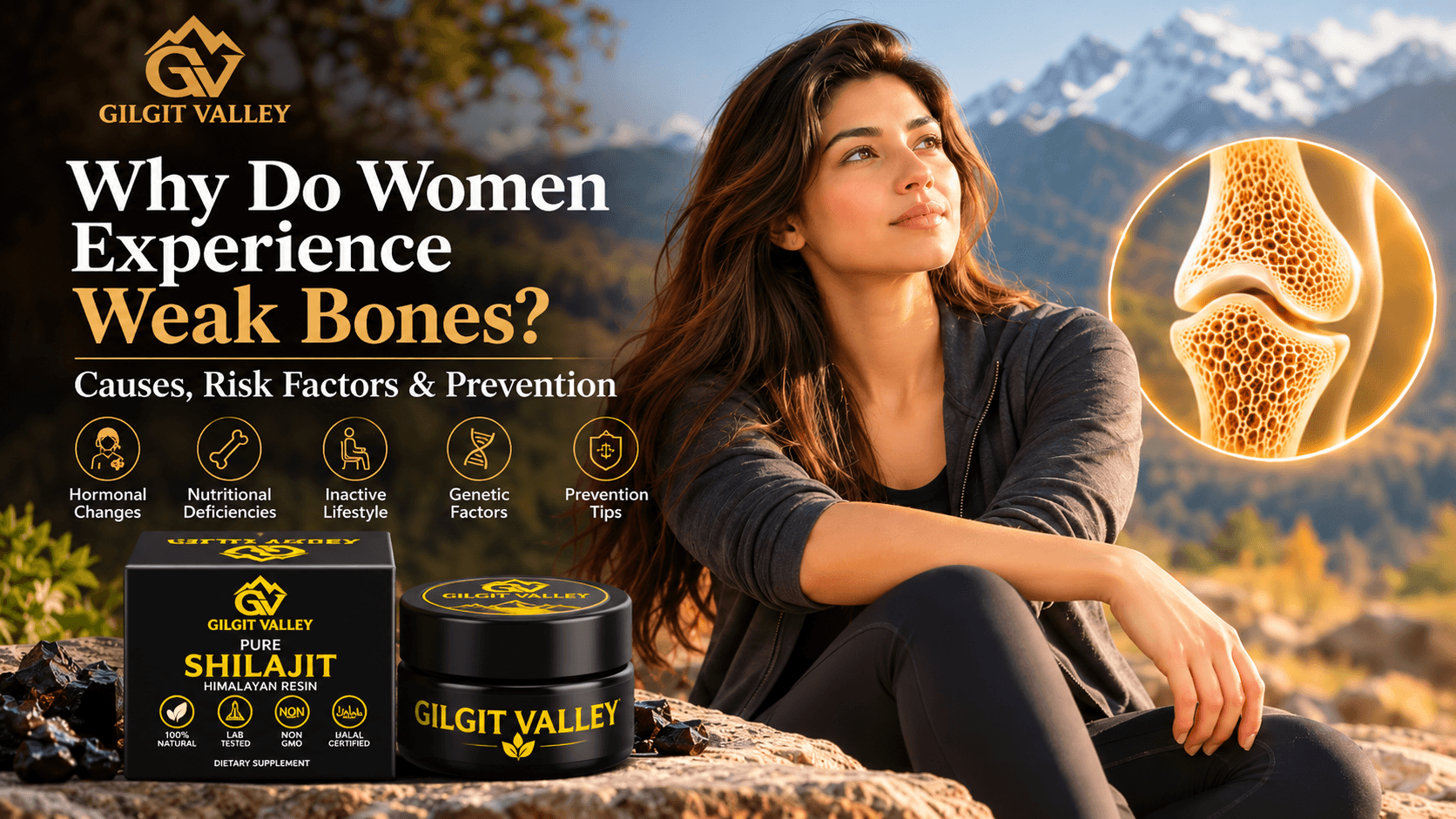
Strong bones are essential for maintaining mobility, physical strength, posture, and an active lifestyle. However, many women do not pay attention to their bone health until they experience back discomfort, reduced mobility, or an unexpected fracture.
Weak bones can develop gradually due to ageing, hormonal changes, nutritional deficiencies, lack of physical activity, and certain medical conditions. One of the most common conditions associated with weakened bones is osteoporosis, which reduces bone density and increases the risk of fractures.
Women may become more vulnerable to bone loss during and after menopause because declining oestrogen levels affect the body’s natural bone-maintenance process.
At Gilgit Valley, we believe that understanding your body’s nutritional needs is an important part of making informed wellness decisions. Shilajit is one of the natural mineral-rich substances that has attracted scientific interest, including research involving postmenopausal women and bone density. However, it is important to understand what the research actually shows before considering any supplement.
Understanding Weak Bones in Women
Bones are living tissues that continuously undergo a natural process of renewal. The body removes old bone tissue and replaces it with new bone tissue through a process called bone remodelling.
During childhood and early adulthood, bone formation generally keeps pace with or exceeds bone breakdown. As people grow older, this balance can change, and bone loss may gradually become greater than bone formation.
When bones lose density and structural strength, they become more vulnerable to fractures.
What Is Osteoporosis?
Osteoporosis is a bone condition in which bone density and bone structure deteriorate, making bones weaker and more likely to break.
It is sometimes called a silent disease because many people do not experience noticeable symptoms until a fracture occurs. Common fracture locations include:
- Hip
- Spine
- Wrist
Osteoporosis affects both men and women, but women have a higher risk, particularly after menopause.
What Is Osteopenia?
Osteopenia refers to bone density that is lower than the expected normal range but not low enough to be classified as osteoporosis.
It does not always progress to osteoporosis. However, it may indicate an increased risk of future bone loss, making early assessment and preventive care important.
Common Causes of Weak Bones in Women
Several factors can contribute to reduced bone density. Some are related to natural biological changes, while others are influenced by nutrition, lifestyle, and medical conditions.
Hormonal Changes and Low Oestrogen Levels
Oestrogen is an important hormone for maintaining healthy bones. It helps regulate the natural process of bone breakdown and formation.
When oestrogen levels decline, particularly during menopause, bone loss can accelerate.
This is one reason women may become more vulnerable to osteoporosis as they get older.
Women who experience early menopause or have their ovaries removed before natural menopause may also face an increased risk of bone loss.
Calcium Deficiency
Calcium is one of the main minerals required for maintaining strong bones and teeth.
If the body does not receive enough calcium through food, it can take calcium from the bones to support other essential functions.
Over time, inadequate calcium intake may contribute to reduced bone strength.
Common dietary sources of calcium include:
- Milk and yoghurt
- Cheese
- Sesame seeds
- Almonds
- Broccoli
- Dark green leafy vegetables
- Calcium-fortified foods
Vitamin D Deficiency
Vitamin D helps the body absorb calcium from food and supports normal bone development and maintenance.
When vitamin D levels are insufficient, the body may struggle to absorb enough calcium, potentially affecting bone health.
Low vitamin D levels can occur due to limited sun exposure, dietary factors, certain medical conditions, or problems with nutrient absorption.
Lack of Physical Activity
Bones respond to physical activity and mechanical loading. Regular weight-bearing and resistance exercises help maintain bone strength.
A sedentary lifestyle, prolonged inactivity, and insufficient muscle-strengthening activity may contribute to bone loss over time.
Women who spend most of their day sitting or avoid regular physical activity may miss important opportunities to support their bone health.
Ageing
Bone density generally reaches its peak during early adulthood. After that, gradual bone loss becomes part of the natural ageing process.
For women, this process may accelerate around menopause.
Although ageing cannot be prevented, healthy nutrition, physical activity, and appropriate medical care can help reduce certain risk factors.
Certain Medical Conditions and Medications
Some medical conditions can affect the body’s ability to maintain healthy bones.
These may include:
- Rheumatoid arthritis
- Thyroid and parathyroid disorders
- Coeliac disease and other conditions affecting nutrient absorption
- Certain hormonal disorders
- Eating disorders associated with inadequate nutrition
Long-term use of certain medications, particularly corticosteroids, may also increase the risk of bone loss.
Women taking long-term medication should discuss possible effects on bone health with their healthcare professional.
Important Nutrients That Support Women’s Bone Health
A balanced diet provides essential nutrients that support bone formation, maintenance, and normal muscle function.
Although calcium and vitamin D receive the most attention, other nutrients also contribute to overall skeletal health.
Calcium: Essential for Bone Structure
Calcium is the primary mineral stored in bones and teeth. It helps maintain bone structure and supports normal muscle contraction and nerve function.
Good dietary sources include:
- Milk
- Yoghurt
- Cheese
- Tofu prepared with calcium
- Almonds
- Sesame seeds
- Leafy green vegetables
Daily calcium requirements depend on age and individual health circumstances.
Vitamin D: Supports Calcium Absorption
Vitamin D helps the body absorb calcium and maintain normal calcium levels.
Sources include:
- Appropriate sunlight exposure
- Oily fish
- Egg yolks
- Fortified foods
- Supplements when recommended by a healthcare professional
Magnesium: Supports Normal Bone Function
Magnesium contributes to normal bone structure and several processes involved in muscle and nerve function.
Dietary sources include pumpkin seeds, almonds, spinach, beans, whole grains, and avocados.
Vitamin K: Important for Bone Metabolism
Vitamin K participates in the activation of proteins involved in bone metabolism.
It is found in foods such as spinach, kale, broccoli, and other green vegetables.
Protein: Supports Bone and Muscle Health
Protein is an important component of bone tissue and helps maintain muscle mass.
Adequate protein intake supports muscle strength, physical function, and overall skeletal health.
Good sources include eggs, fish, chicken, lentils, beans, dairy products, and nuts.
What About Minerals Found in Shilajit?
Shilajit is a naturally occurring substance containing a complex mixture of organic compounds and mineral constituents. Its composition can vary depending on its geographical source, processing, and quality.
Some of the minerals and compounds found in Shilajit have attracted scientific interest because minerals play different roles in normal body functions. However, the presence of minerals in Shilajit does not establish that it can provide the calcium or vitamin D required for healthy bones.
A balanced diet remains the foundation of bone nutrition. Shilajit should not be considered a replacement for calcium-rich foods, vitamin D, or prescribed supplements.
How Menopause Affects Women’s Bone Health
Menopause is one of the major life stages associated with changes in women’s bone health.
During menopause, the body’s production of oestrogen decreases. Since oestrogen helps regulate bone remodelling, lower levels can accelerate bone loss.
Why Does Bone Loss Increase After Menopause?
Before menopause, oestrogen helps maintain a balance between bone formation and breakdown.
After menopause, reduced oestrogen levels can cause bone breakdown to occur faster than new bone formation.
As a result, women may experience a decline in bone density, especially during the first few years after menopause.
Who May Have a Higher Risk?
Certain women may have a greater risk of developing osteoporosis, including those who:
- Experience menopause before the age of 45
- Have a family history of osteoporosis or hip fractures
- Have a low body weight
- Have a history of eating disorders
- Experience prolonged absence of menstrual periods
- Have certain medical conditions affecting hormones or nutrient absorption
Women approaching menopause should discuss their individual bone health risks with a healthcare professional.
Signs and Symptoms of Weak Bones
One important thing to understand is that weak bones do not always produce noticeable symptoms.
Osteoporosis can develop without pain or obvious physical changes until a fracture occurs.
However, some signs may indicate an existing bone problem or fracture.
Unexpected Fractures
A fracture following a minor fall or relatively small impact may indicate reduced bone strength.
Back Pain
Sudden or persistent back pain may sometimes be associated with a spinal fracture, particularly in women with osteoporosis.
Loss of Height
Some women may gradually lose height due to compression fractures in the spine.
Changes in Posture
A noticeable forward curve in the upper back can sometimes develop when vertebrae become compressed.
These signs do not confirm osteoporosis. A medical assessment is necessary to identify the underlying cause.
How Women Can Protect Their Bone Health Naturally
Building and maintaining healthy bones requires consistent attention to nutrition, exercise, and lifestyle habits.
The following practices can help support bone health throughout different stages of life.
Eat Calcium-Rich Foods
Include calcium-rich foods in your daily diet.
Milk, yoghurt, cheese, almonds, sesame seeds, and green leafy vegetables can help increase dietary calcium intake.
Try to maintain a varied diet rather than depending on a single food source.
Get Enough Vitamin D
Vitamin D supports calcium absorption and normal bone function.
Include vitamin D-containing foods in your diet and maintain appropriate sun exposure.
If you are at risk of vitamin D deficiency, consult a healthcare professional about testing and whether supplementation is necessary.
Perform Weight-Bearing Exercises
Weight-bearing activities make your bones and muscles work against gravity.
Examples include:
- Brisk walking
- Dancing
- Stair climbing
- Hiking
- Jogging, where appropriate
These activities can help support bone strength when performed according to your fitness level and health condition.
Include Strength Training
Resistance exercises help strengthen muscles and provide beneficial loading to bones.
Examples include:
- Bodyweight squats
- Resistance-band exercises
- Light weightlifting
- Supervised strength training
Women with osteoporosis or a history of fractures should seek professional guidance before beginning a new exercise routine.
Maintain a Healthy Body Weight
Being underweight can increase the risk of low bone density.
Maintaining a healthy body weight through balanced nutrition and appropriate physical activity supports overall health.
Avoid extreme dieting or restrictive eating habits that may reduce essential nutrient intake.
Avoid Smoking and Excessive Alcohol
Smoking is associated with an increased risk of osteoporosis and fractures.
Excessive alcohol consumption can also negatively affect bone health and increase the likelihood of falls.
Avoiding smoking and limiting alcohol are important lifestyle steps for long-term bone health.
Shilajit and Women’s Bone Health: What Does Research Say?
Shilajit has been traditionally used in wellness practices and is being studied for its complex composition and potential biological properties.
One area of scientific interest is its possible relationship with bone health in postmenopausal women.
What Did the Human Study Find?
A randomized, double-blind, placebo-controlled study published in 2022 examined a standardized Shilajit extract in 60 postmenopausal women aged 45–65 who had osteopenia.
Participants were assigned to receive a placebo or 250 mg or 500 mg of the extract daily for 48 weeks.
Researchers reported that women receiving the standardized extract had more favourable changes in bone mineral density measurements at the lumbar spine and femoral neck compared with the placebo group.
The study also examined markers associated with bone turnover, oxidative stress, and inflammation.
These findings are interesting, but they need to be interpreted carefully.
Does This Mean Shilajit Can Prevent Osteoporosis?
No. One relatively small clinical trial is not enough to establish Shilajit as a proven treatment or prevention method for osteoporosis.
The study examined a specific standardized extract under controlled conditions. Its results cannot automatically be applied to every Shilajit resin or commercially available supplement.
More independent human research is needed to understand its long-term effects, appropriate use, and safety in different groups of women.
Why Is Product Quality Important?
Shilajit is a naturally sourced substance, and its composition may vary. Poorly processed or contaminated products can contain unwanted substances, including heavy metals.
Before considering a Shilajit product, consumers should look for transparent sourcing, reliable quality information, and appropriate testing.
For a closer look at product testing and purity considerations, read our previous article, “How Is Shilajit Lab Tested? A Complete Guide.”
At Gilgit Valley, we offer Pure Shilajit Resin in three available sizes:
- Gilgit Valley Pure Shilajit 10g
- Gilgit Valley Pure Shilajit 20g
- Gilgit Valley Pure Shilajit 30g
Our focus is on providing clear product information so customers can make informed purchasing decisions.
Shilajit should not replace a balanced diet, calcium or vitamin D supplementation when medically required, or prescribed osteoporosis treatment.
Can Shilajit Replace Calcium or Vitamin D Supplements?
No. Shilajit should not be used as a replacement for calcium or vitamin D supplements.
Calcium and vitamin D have established roles in maintaining normal bone health. Their supplementation may be recommended when dietary intake or individual levels are insufficient.
Shilajit has a different composition, and the mineral content can vary between products.
Even though preliminary research has examined a standardized Shilajit extract in postmenopausal women, there is not enough evidence to recommend it as a substitute for established bone-health nutrients or osteoporosis medication.
Women who have low bone density should discuss their nutritional requirements and treatment options with a qualified healthcare professional.
When Should Women Consult a Doctor About Bone Health?
Women do not need to wait for a fracture before discussing bone health with a healthcare professional.
Medical assessment may be particularly important if you:
- Have experienced menopause at an early age
- Have a family history of osteoporosis or hip fractures
- Have had a fracture after a minor fall
- Have used corticosteroid medication for a prolonged period
- Have a medical condition associated with bone loss
- Have unexplained height loss or persistent back pain
What Is a DEXA Scan?
A DEXA scan, also called a bone density scan, is a zswwso test fkuh wcnxaucn bone mineral density.
It uses low-dose X-rays to assess bone density, often at the hip and spine.
The results can help healthcare professionals identify:
- Normal bone density
- Osteopenia
- Osteoporosis
Screening recommendations depend on age, medical history, and individual risk factors. For example, US guidance recommends routine screening for women aged 65 and older, with earlier assessment for younger postmenopausal women who have increased fracture risk. Local clinical recommendations may differ.
Early assessment can help identify bone loss and guide appropriate prevention or treatment.
Frequently Asked Questions
Q1. Why do women experience weak bones?
A: Common causes include ageing, declining oestrogen levels, menopause, insufficient calcium or vitamin D, physical inactivity, certain medical conditions, and long-term use of some medications.
Q2. Does menopause cause weak bones?
A: Menopause can accelerate bone loss because oestrogen levels decrease. This may increase the risk of osteopenia and osteoporosis, particularly when other risk factors are present.
Q3. Which nutrients are most important for women’s bone health?
A: Calcium and vitamin D are particularly important. Protein, magnesium, and vitamin K also contribute to normal bone structure and function.
Q4. Can walking help strengthen bones?
A: Walking is a weight-bearing activity that can support bone health. Combining walking with suitable resistance exercises can provide additional benefits for muscles and bones.
Q5. Can weak bones become strong again?
A: The appropriate approach depends on the cause and severity of bone loss. Nutrition, exercise, lifestyle changes, and prescribed medical treatments can help maintain bone strength and reduce fracture risk. Some people may also improve bone density with appropriate treatment.
Q6. Does Shilajit improve bone density in women?
A: A small 2022 clinical trial reported favourable changes in bone mineral density among postmenopausal women with osteopenia who received a specific standardized Shilajit extract. However, more research is needed, and this does not establish all Shilajit products as effective for bone health.
Q7. Can Shilajit treat osteoporosis?
A: There is insufficient evidence to recommend Shilajit as a treatment for osteoporosis. Women diagnosed with osteoporosis should follow evidence-based medical advice and prescribed treatment.
Q8. At what age should women start caring about bone health?
A: Bone health should be supported throughout life. Building healthy bones during childhood and early adulthood helps establish a strong foundation, while maintaining bone health becomes increasingly important with ageing and menopause.
Conclusion
Healthy bones are essential for maintaining mobility, independence, and an active lifestyle. Although women may experience increased bone loss with ageing and menopause, several lifestyle factors can help protect bone health.
A balanced diet, sufficient calcium and vitamin D, regular weight-bearing activity, strength training, and appropriate medical screening all play important roles in maintaining healthy bones.
Research into natural substances such as Shilajit is ongoing. Early findings involving a specific standardized extract in postmenopausal women are interesting, but further research is needed before making firm conclusions about its role in bone health.
At Gilgit Valley, we focus on providing Pure Shilajit Resin in three convenient sizes: 10g, 20g, and 30g. We encourage customers to make informed wellness choices based on reliable product information and their individual needs.