
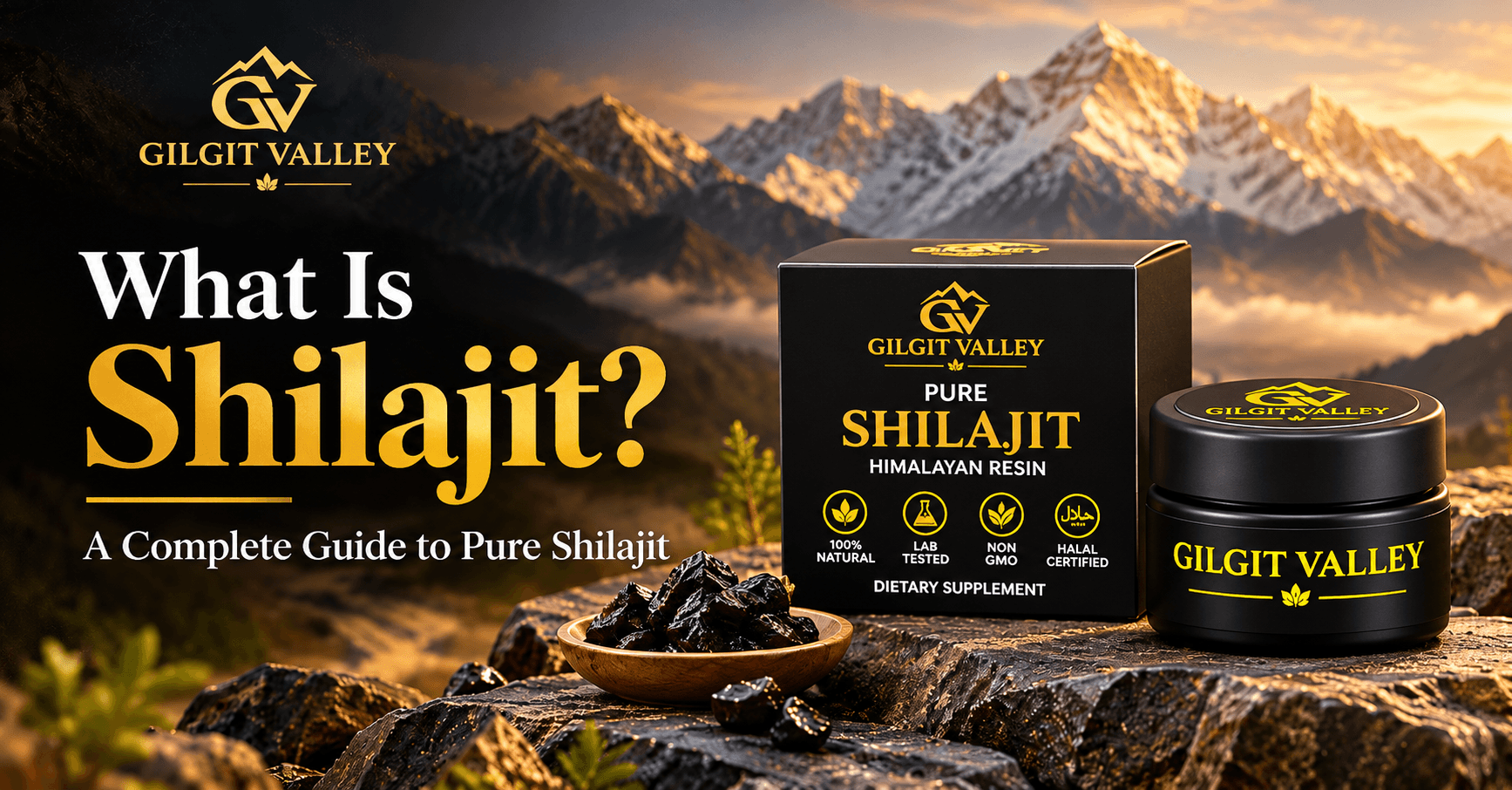
Shilajit is a naturally occurring substance found in mountainous regions, including the Himalayas. Known for its distinctive dark appearance and complex composition, it has a long history of use in traditional wellness practices. Today, growing interest in natural wellness products has led more people to explore what Shilajit is, how it is sourced, and what to consider before purchasing it.
However, not all Shilajit products are necessarily the same. Their composition, processing methods, purity, and quality assurance can vary. Understanding these differences can help consumers make more informed choices.
At Gilgit Valley, we believe that choosing Shilajit should begin with knowledge, transparency, and responsible product selection. This guide explains what Shilajit is, its natural composition, its origins, and the key factors to consider when looking for pure Shilajit resin.
What Is Shilajit and How Does It Form?
Shilajit is a naturally occurring, dark-colored substance that develops over long periods through complex interactions between organic material, rock formations, and environmental conditions in mountainous regions. It is commonly associated with the Himalayas and other high-altitude mountain ranges.
Its appearance typically ranges from dark brown to nearly black, and its consistency may vary depending on temperature, moisture, and processing. Shilajit resin is the concentrated, resin-like form commonly sold as a wellness product.
Although Shilajit has been used in traditional wellness practices for centuries, its natural formation and chemical composition are complex. The characteristics of a particular product depend on its source and subsequent processing.
Understanding its origin is only the first step. Proper purification, quality control, and appropriate testing are also important considerations when selecting a Shilajit product.
What Is Shilajit Made Of? Understanding Fulvic Acid and Minerals
Shilajit contains a complex mixture of organic compounds and inorganic constituents. Its composition can differ according to geographical origin, environmental conditions, and processing methods.
Two commonly discussed aspects of Shilajit’s composition are fulvic acid and minerals.
- Fulvic acid: Fulvic acid refers to a group of organic compounds associated with natural organic matter. It is frequently discussed in relation to Shilajit, but its measured concentration can vary between products. A laboratory analysis is needed to establish the amount present in a specific sample.
- Minerals and trace elements: Shilajit may contain various mineral elements in differing concentrations. However, the presence of minerals does not automatically establish product quality or safety. Some elements, including certain heavy metals, may pose health risks depending on their concentration.
- Other organic compounds: Shilajit also contains other naturally occurring organic constituents that contribute to its overall chemical profile.
Consumers should be cautious about products advertising precise fulvic acid percentages, mineral counts, or exceptional nutritional claims without supporting laboratory documentation. Reliable product information should distinguish between general characteristics of Shilajit and verified findings for the specific product being sold.
Where Does Himalayan Shilajit Come From?
Himalayan Shilajit is associated with mountainous areas across parts of South and Central Asia. The Himalayan region includes diverse geographical environments, so products described as Himalayan Shilajit may not all come from the same location.
Gilgit-Baltistan, in northern Pakistan, is known for its mountainous landscapes and distinctive natural environment. For consumers interested in mountain-sourced products, understanding the actual collection and sourcing location can provide useful context.
Nevertheless, geographical origin alone does not guarantee purity, authenticity, or superior quality. Responsible sourcing also involves understanding how the raw material is collected, handled, purified, and prepared for sale.
When evaluating a Shilajit brand, look for clear sourcing information rather than relying exclusively on phrases such as “high-altitude,” “Himalayan,” or “mountain-pure.”
A transparent brand should be able to explain its sourcing practices and provide supporting information where available. For Gilgit Valley, communicating a documented origin and a clearly explained quality-control process can help customers understand the journey from source to finished product.
How to Identify Pure Shilajit: Purification, Quality and Lab Testing
Choosing pure Shilajit requires more than judging its appearance. Natural raw material can contain unwanted substances, and visual inspection alone cannot reliably establish authenticity or safety.
Consider these important factors before purchasing:
- Purification process: Ask how the raw material is processed and purified. A brand should explain its process accurately without making unsupported claims about what purification removes.
- Independent laboratory testing: Look for appropriate laboratory reports covering relevant safety and quality parameters. Depending on the product and testing scope, these may include heavy metals, microbial contamination, and compositional analysis.
- Certificate of Analysis (COA): A COA can provide information about the tested sample, analytical methods, and reported results. Check whether the document identifies the product or batch being sold and whether the testing laboratory can be verified.
- Transparent product information: Reliable product listings should clearly state the product form, net quantity, ingredients, usage instructions, and relevant warnings.
- Traceable sourcing: Information about the origin and handling of the raw material can help consumers assess the brand’s transparency.
Be careful with claims such as “100% pure,” “zero contaminants,” or “highest fulvic acid” when no relevant evidence is supplied. A laboratory-tested claim is most useful when customers can understand what was tested, which sample was assessed, and what the results actually demonstrate.
At Gilgit Valley, product quality should be communicated through verifiable information rather than promises alone. Any published testing claims should correspond to actual product documentation.
How to Choose and Use Shilajit Resin Responsibly
Shilajit is available in several forms, including resin, powder, and capsules. Resin is a concentrated, sticky form that is commonly dissolved in a suitable beverage before use. Each product may differ in composition, concentration, and serving instructions.
When selecting Shilajit resin, consider the following:
- Check the ingredients: Confirm that the product contains the ingredients stated on its label and review any additional components.
- Review the serving instructions: Follow the manufacturer’s directions rather than assuming all Shilajit products require the same amount.
- Consider product quantity: Gilgit Valley offers Pure Shilajit in 10g, 20g, and 30g sizes. Compare the net quantity and price per gram when deciding which pack suits your needs.
- Store it correctly: Follow the storage instructions on the packaging to help maintain the product’s quality.
- Consider your health circumstances: Shilajit supplements are not suitable for everyone. People who are pregnant or breastfeeding, have an underlying medical condition, or take prescription medication should seek advice from a qualified healthcare professional before use.
Evidence for many claimed health benefits remains limited, and product quality can vary. Shilajit should not be treated as a substitute for prescribed medication, a balanced diet, or professional medical care.
The most responsible approach is to choose a product with clear labeling, appropriate testing, and transparent sourcing, then use it according to its instructions.
Conclusion
Shilajit is a naturally occurring substance with a complex composition and a long history in traditional wellness practices. Understanding its origin, fulvic acid content, mineral profile, purification, and laboratory testing can help consumers make better-informed purchasing decisions.
When choosing pure Shilajit resin, look beyond marketing claims. Prioritize transparent sourcing, clear product information, appropriate quality testing, and responsible usage guidance.
At Gilgit Valley, our goal is to help customers make informed choices through clear product information and a commitment to responsible quality practices. Whether you are considering the 10g, 20g, or 30g Pure Shilajit option, understanding what you are buying is an important first step.
Frequently Asked Questions
Q1. What is pure Shilajit?
A: Pure Shilajit refers to Shilajit that has been appropriately processed and assessed for quality. The term alone does not guarantee authenticity or safety, so sourcing information and relevant laboratory testing are important.
Q2. What is fulvic acid in Shilajit?
A: Fulvic acid is a group of organic compounds associated with Shilajit’s natural composition. Its concentration can vary, and the amount in a specific product should be established through suitable laboratory analysis.
Q3. Is Himalayan Shilajit always pure?
A: No. A Himalayan origin does not automatically guarantee purity or safety. The collection, processing, purification, handling, and testing of the finished product all matter.
Q4. How can I check whether Shilajit is lab tested?
A: Look for a relevant Certificate of Analysis or laboratory report that identifies the tested sample or batch, describes the parameters assessed, and provides verifiable results. A general “lab tested” statement without supporting documentation provides less information.
Q5. Which Gilgit Valley Shilajit size should I choose?
A: Gilgit Valley offers Pure Shilajit in 10g, 20g, and 30g sizes. Compare the net quantity, price, and packaging information to choose the option that best suits your preferences. Follow the product’s serving instructions regardless of pack size.