

With the growing popularity of natural wellness products, Shilajit has attracted attention from consumers looking for authentic, mountain-sourced resin. However, not every product sold as Shilajit offers the same level of quality, purity, or transparency. Some products may be poorly processed, contaminated, inaccurately labeled, or sold without reliable evidence of their origin.
So, how can you distinguish real Shilajit from fake or low-quality alternatives?
The answer is not as simple as checking its color, smell, or texture. Although these characteristics may offer clues about a product’s physical properties, they cannot independently establish its authenticity or safety. More reliable indicators include transparent sourcing, appropriate purification, verifiable laboratory testing, and accurate product information.
In this guide, Gilgit Valley explains the key differences between genuine and potentially counterfeit Shilajit, common warning signs to look for, and practical steps to take before purchasing Shilajit resin.
What Is the Difference Between Real and Fake Shilajit?
Authentic Shilajit is a naturally occurring substance found in mountainous environments. It contains a complex mixture of organic compounds and minerals, and its composition can vary according to its geographical source and processing.
Products marketed as fake Shilajit may contain unrelated substances, diluted material, undeclared ingredients, or products that do not match their advertised description. However, a product can also be genuine Shilajit and still be low quality, inadequately purified, or contaminated.
This distinction matters because authenticity and safety are not the same thing. Identifying the correct substance does not automatically establish that it is suitable for consumption.
When comparing Shilajit products, consider the following:
- Authenticity: Is there credible evidence supporting the product’s identity and claimed origin?
- Purification: Is the processing method explained and supported by appropriate quality controls?
- Composition: Is the product accurately labeled, including its ingredients and relevant specifications?
- Safety: Has the product been tested for appropriate contaminants?
- Transparency: Can the seller provide verifiable product information and relevant testing documents?
A trustworthy seller should be able to explain these points without relying solely on marketing phrases such as “100% pure,” “premium Himalayan,” or “highest quality.”
Real vs Fake Shilajit: Color, Texture, Smell and Taste
Consumers often look for physical signs to determine whether Shilajit is genuine. These observations can help describe a product, but none should be treated as a conclusive authenticity test.
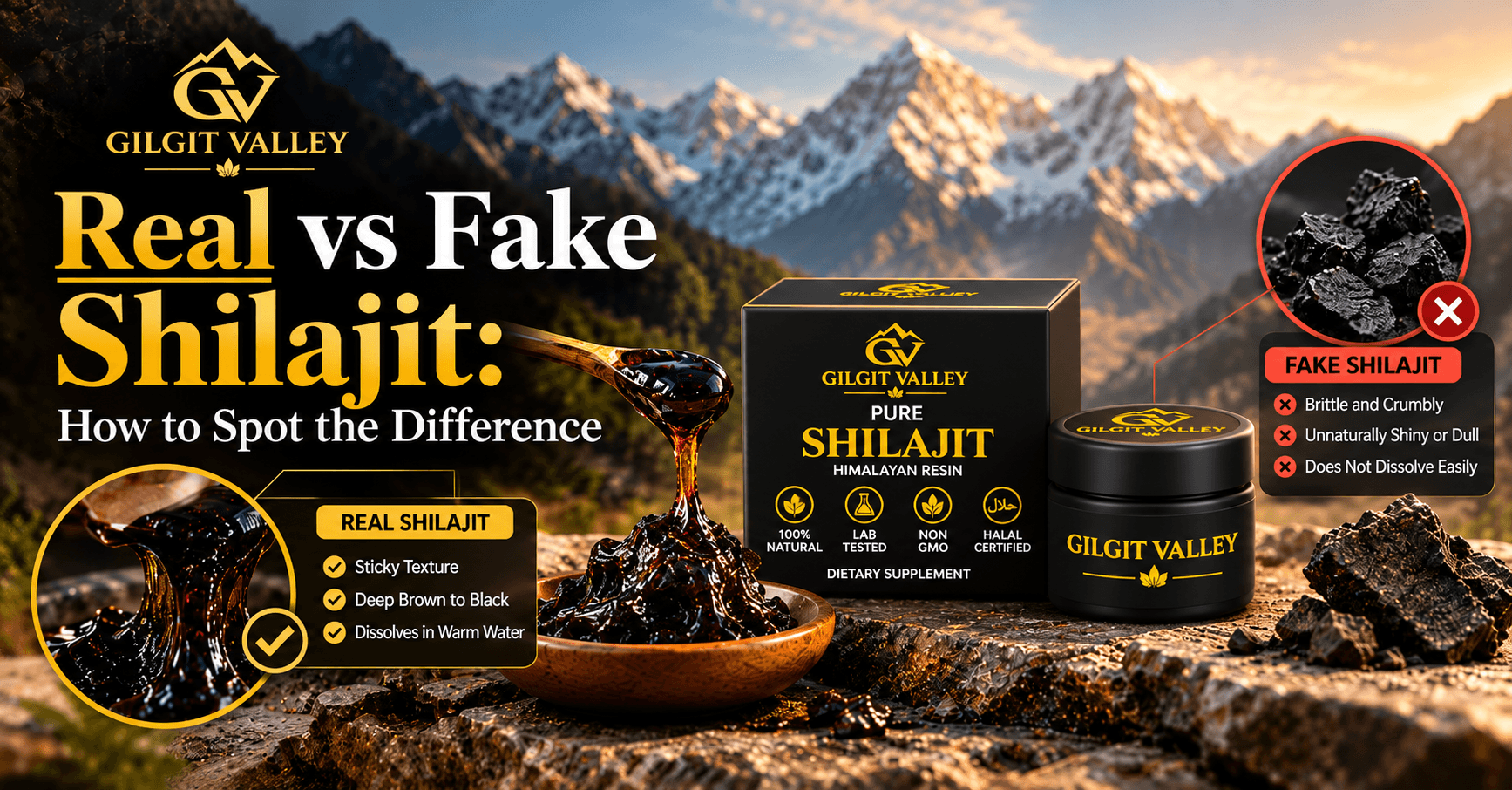
Color: Shilajit resin is commonly dark brown to nearly black. However, color can vary with composition, source, moisture, and processing. A dark appearance alone does not prove authenticity.
Texture: Resin may be sticky, dense, or more pliable at warmer temperatures and firmer in cooler conditions. These changes can be consistent with its physical properties, but other materials can behave similarly.
Smell: Shilajit can have a distinctive, strong earthy odor. However, smell varies between products and cannot reliably identify genuine material or reveal contamination.
Taste: Shilajit is often described as having a strong, earthy or bitter taste. Taste is subjective and is not a reliable method for confirming purity. Never taste an unknown substance simply to test whether it is genuine.
Behavior in water: Some Shilajit resins disperse or dissolve in water, depending on their composition and the conditions. Other substances may behave similarly, while genuine material may not behave identically in every test. A home water test cannot establish authenticity or detect all contaminants.
The key takeaway is simple: physical characteristics may raise questions, but they cannot replace reliable testing. Avoid purchasing decisions based solely on viral home-test videos or claims that a single visual sign proves a product is real or fake.
How to Verify Shilajit Purity Through Laboratory Testing
Laboratory testing is one of the most useful ways to assess a Shilajit product’s composition and safety. Rather than relying on appearance or advertising claims, consumers can review evidence showing what was tested and what the results revealed.
Here are the main things to check.
Certificate of Analysis (COA)
A Certificate of Analysis provides analytical results for a tested sample. When reviewing a COA, check the product or batch identification, testing date, laboratory details, methods used, and reported results. Make sure the document actually relates to the product being purchased.
Heavy metal testing
Ask whether the product has been tested for relevant heavy metals, such as lead, arsenic, cadmium, and mercury. The appropriate testing scope and interpretation depend on the product and applicable safety requirements.
Microbial testing
Microbiological testing can help assess whether the tested sample meets relevant limits for specified microorganisms. The exact organisms and parameters covered should be listed in the report.
Fulvic acid and composition analysis
If a seller advertises a specific fulvic acid percentage or mineral profile, look for analytical evidence supporting that exact claim. Do not assume every product has the same composition.
Laboratory credibility
Check whether the laboratory is identifiable and whether its qualifications and accreditation are relevant to the tests performed. Accreditation should not be assumed simply because a report displays a laboratory logo.
For additional confidence, look for reports that can be independently verified with the laboratory or matched to a specific product batch.
A seller saying “lab tested” is only the starting point. The scope, results, and relevance of the testing are what make the claim meaningful.
Seven Warning Signs of Fake or Low-Quality Shilajit
Before buying Shilajit resin online or from a physical store, watch for these warning signs.
- No clear source information
A seller who cannot explain where the product comes from or provide reasonable sourcing information offers limited transparency. Mountain-origin claims should be supported by credible information rather than attractive imagery alone.
- No verifiable laboratory reports
If a brand advertises purity or safety testing but cannot provide relevant documentation, ask for clarification before purchasing.
- Unrealistic health promises
Claims that Shilajit cures diseases, guarantees dramatic physical changes, or produces immediate results should be treated with caution. Shilajit is not a substitute for medical treatment.
- Unsupported fulvic acid or mineral claims
Exact percentages and mineral counts should have appropriate analytical support. A large number in a product description does not automatically indicate superior quality.
- Missing ingredient and product details
Reliable product listings should clearly identify the product form, net quantity, ingredients, manufacturer or seller details, and appropriate usage instructions.
- Unclear purification and handling practices
The seller should be able to explain the product’s processing and quality-control approach. Avoid assuming that naturally collected material is automatically ready for consumption.
- Pressure-based marketing without evidence
Extreme discounts, countdown timers, exaggerated superiority claims, or unsupported statements about competitors are not proof that a product is counterfeit. However, when combined with missing documentation and vague product information, they justify closer scrutiny.
One warning sign alone does not establish that a product is fake. Consider the overall evidence and request clarification when important information is missing.
How to Choose Authentic Shilajit Online in Pakistan
Buying Shilajit online can be convenient, but customers should evaluate the seller as carefully as the product itself.
Use this checklist before placing an order:
- Review the brand’s website: Look for clear company information, product details, contact options, and transparent policies.
- Check the product label: Confirm the net quantity, ingredients, serving instructions, and relevant warnings.
- Ask for testing documentation: Request a relevant COA or laboratory report, preferably linked to the product or batch being sold.
- Verify the claimed origin: Look for specific, credible sourcing information rather than relying only on words such as “Himalayan” or “mountain-sourced.”
- Understand the purification process: Check whether the brand explains how its product is prepared and quality-controlled.
- Compare value, not just price: A lower price does not automatically mean a product is fake, and a higher price does not guarantee purity. Compare quantity, documentation, ingredients, and quality assurance.
- Review delivery and return policies: Make sure the seller explains payment options, delivery coverage, customer support, and how product-related concerns are handled.
For customers exploring Gilgit Valley, the goal should be to make the buying process more transparent through clear product information, responsible quality practices, and accessible support.
Before purchasing any Shilajit product, ask the same essential questions: Where does it come from? How is it processed? What has been tested? Can the results be verified?
A brand that answers these questions clearly gives customers a better basis for making an informed decision.
Conclusion
Distinguishing real Shilajit from fake or low-quality alternatives requires more than checking color, smell, texture, or how the resin behaves in water. These physical characteristics are not reliable proof of authenticity, and they cannot establish whether a product is free from harmful contaminants.
The more dependable approach is to evaluate sourcing transparency, purification practices, accurate labeling, and relevant laboratory reports. Pay particular attention to batch identification, heavy metal testing, microbial testing, and evidence supporting specific composition claims.
At Gilgit Valley, we believe informed purchasing starts with asking the right questions and understanding the evidence behind product claims. Whether you are buying Shilajit for the first time or comparing different brands, prioritize transparency and verifiable quality information over marketing promises.
Choose Shilajit with confidence by choosing evidence over assumptions.
Frequently Asked Questions
Q1. How can I tell if Shil ajit is real or fake?
Start by checking the seller’s sourcing information, ingredient details, purification practices, and relevant laboratory reports. Color, smell, taste, and texture cannot independently confirm authenticity.
Q2. Does real Shilajit dissolve in water?
Shilajit resin may disperse or dissolve in water depending on its composition and the conditions. However, this behavior is not a definitive authenticity test because other substances may behave similarly.
Q3. What color is genuine Shilajit?
Genuine Shilajit resin is commonly dark brown to nearly black, although its appearance can vary. Color alone cannot confirm purity, authenticity, or safety.
Q4. How do I check whether Shilajit is lab tested?
Ask the seller for a relevant Certificate of Analysis or laboratory report. Check the sample or batch identification, laboratory details, testing scope, and results. Where possible, verify the document with the laboratory.
Q5. Is expensive Shilajit always better than cheaper Shilajit?
No. Price alone does not establish quality. Compare product quantity, sourcing transparency, purification information, ingredients, and verifiable laboratory testing before deciding which product offers better value.